
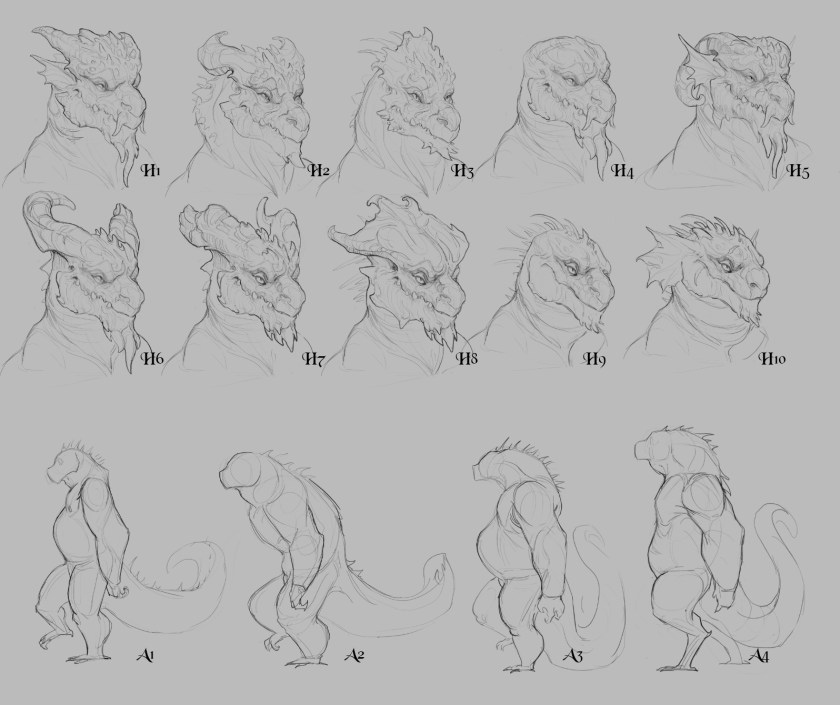
My book series, An Oracle’s Deception, is high fantasy; therefore, I took the liberty in adding fantastical creatures to my novel. As a child, I have loved the fact that many ancient myths and religions have deities that look like humans with animalistic characteristics. The most obvious ones are Egyptian and Greek Pantheon. Research has shown me that all myths and some current religions believed in these fantastical beings still.
I live for this.
This fact solidified the decision that I wanted to incorporate these myths into my manuscript for high fantasy. With that said, this is a tricky thing to write. Still, I research for all my creatures to make sure that if they are as close to the source material. I do not want to anger a religious group and let it blow up in social media, which would be the death of any book, in my opinion. Then again, even if I’m the most careful and sensitive writer to other people’s cultures, someone will be angry and get their pitchfork. With that said, I write for me and for the crazy imagination I have, and as my mother told me, “You will not please everyone with your work, and it’s a fact of life.”
Love it or hate it, she is right, even by writing about the color “Red” someone will be “triggered” and debate that “Orange is the better red.” Funny enough, I had that discussion before.
To my dismay, many mythical creatures in fantasy are the invention of other writers, and it makes it a tad more challenging to use them. For example, I would have loved to use “Tieflingin” in my writing, but my mind immediately stops me since they are a creature in the fourth edition of D&D. Well, if I’m careful and how I have seen other authors do it, is avoid the word “Tiefling” while using the descriptive characteristics to a point. So I can say, here is my new race of demon humans who are orange. They sound like a “Tiefling,” but they are not.
To me, that sounds so lazy and unimaginative.
The only exception to this rule is the old monsters like werewolves, vampires, or as I like to call them, the originals. They are universally used to no end, which again, makes it harder to write and produce original work. In the end, that’s the job I chose to do, rewrite to make unique. I, for example, created zombie children that plague the characters in my book.
Was it original? Eh, sort of, they are program to kill.
Do they do zombie things? Yes, except moan the words “brains.”
Is it close to the source material? Well, I did study Haitian culture and researched how priests created a living dead. I also searched in European history stories of undead and the cause of their reanimation. Was it a malady? Was it miasma? A curse or an elixir went wrong, putting a body in a comatose state? Aliens? All these questions allow me to create a myth and rewrite a tale that is already popular. There are always options for creativity that history has left for us. I, for one, prefer to exploit history, since they can’t sue the living crap out of me. But someone who worships zombies might try.
But, is creating from myth complicated? The answer is yes. Will it stop my imagination from producing content? Nope!
Art by: Cindy Avelino
Character: Atzucolt
 K.Rivera Author page